
Review · INDIA
Himalayas: 11 Day Motorbike Expedition To Ladakh (North India)
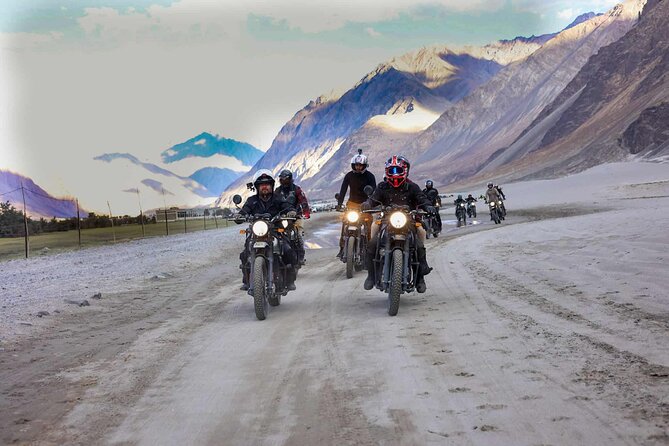
The great appeal here is the chance to cross Ladakh by motorcycle rather than watch the Himalayas through a bus window. Over 11 days, you ride from the Delhi and Manali side toward Leh, then out to Nubra Valley, Pangong Tso, Hanle and the high road at Umling La. The route packs in remote villages, rough mountain roads and some of the highest passes in India.
I like the backup vehicle, mechanic and oxygen cylinder, since high-altitude riding is thrilling but never entirely predictable. I also like that breakfast, dinner, accommodation and permits are handled, leaving you to focus on fuel, weather and the road ahead.
The main caution is the schedule. Some days call for nine to ten hours in the saddle, and the published route has a few confusing details, including references to Padum and a return from Nubra that do not line up neatly with the day-by-day stops. Confirm the exact start point, bike, route and transport plan before paying.
Key points to know before you book
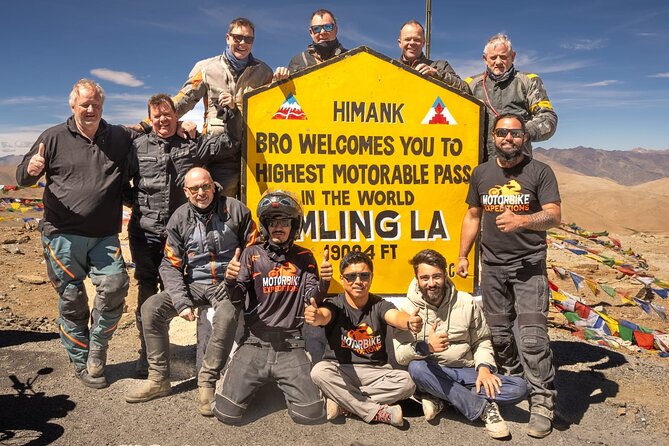
- High-altitude riding: The route includes Shinkula Pass, Singga La at about 5,009 metres, Khardung La and Umling La.
- Support on the road: A backup vehicle carries luggage and a mechanic from Day 3 through Day 10.
- Remote overnight stops: You stay in Jispa, Hunder, Merak beside Pangong Lake, Hanle and Leh.
- Long riding days: The Padum to Lamayuru section is described as roughly 332 kilometres and nine to ten hours.
- Meals are partly covered: Nine dinners and ten breakfasts are included, but lunch and drinks are generally your responsibility.
- Bring light luggage: The recommended maximum is 60 litres, and you must move your own bag into the support vehicle and accommodation.
Why this route feels different from a standard Ladakh tour
Many Ladakh trips revolve around a few famous viewpoints reached by car. This one is built around the road itself. You ride through changing terrain, stop for fuel and tea, cross exposed passes, and reach small settlements that feel far removed from the cities of northern India.
That gives the trip a strong sense of purpose. You are not simply being taken to Pangong Lake for a quick photograph. You must earn the view with a full day on the bike.
The route also combines two very different parts of North India. The opening section runs through the Manali and Lahaul area, with green valleys, the Atal Tunnel and places such as Sissu and Tandi. Later, the scenery becomes much barer and more severe around Leh, Nubra, Pangong and Hanle.
You should be comfortable with uncertainty. Mountain roads can change, and the supplied terms specifically exclude extra costs caused by bad weather, road closures, breakdowns, union issues and other events beyond the operator’s control. The support system helps, but it does not turn a Himalayan expedition into a fixed-timetable holiday.
A few more rides around India worth a look
- Himalayas Motorcycle Escapades
★ 5.0 · 81 reviews - Leh Ladakh Motorcycle Tour / Private Luxury Car Tours
★ 5.0 · 26 reviews - Leh Ladakh Motorcycle Tour – 7 Days Of Ultimate Thrill
★ 5.0 · 17 reviews
Days 1 and 2: Delhi, the overnight bus and arrival near Manali
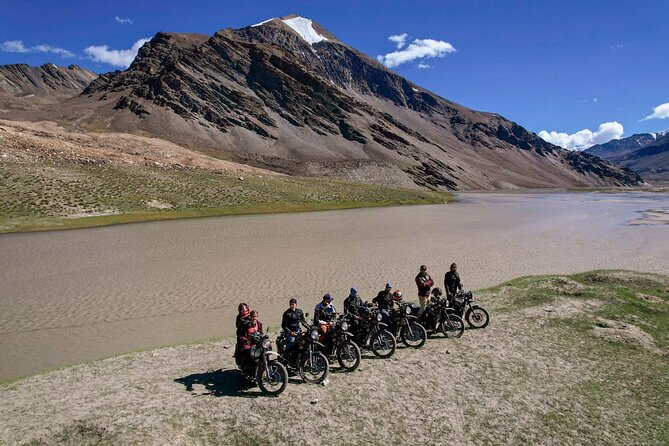
The journey begins with an overnight Volvo bus from Delhi or Chandigarh toward Manali. This is practical, but it is not a small detail. An overnight bus followed by a motorcycle handover can leave you short on sleep, so plan your first day with care.
The supplied schedule says the guide meets you at Bhuntar, then takes you to a hotel for rest. Bhuntar is the arrival point mentioned for the bus, while Manali is the main base for the next riding section. The precise bus arrangement should be confirmed because the stated meeting point elsewhere is Leh, not Delhi or Bhuntar.
Day 2 is mainly about arrival, rest and preparation. That pause matters. You are about to ride into higher country, and a slow start is more sensible than rushing straight into a demanding pass crossing.
The tour is private for your group, which means you are not being folded into a large public coach excursion. The road captain is English-speaking, although no individual guide name is provided, so ask who will lead your departure.
Day 3: Manali, Atal Tunnel, Sissu, Tandi and Jispa
The first riding day starts after breakfast from Bhuntar. The route passes through Manali, where you have a short stop for photographs and video. Manali is a useful transition point, shifting the trip from city access roads into the mountain route.
Atal Tunnel is next. Built beneath Rohtang Pass and named after former Prime Minister Atal Bihari Vajpayee, it is an impressive piece of road engineering. The scheduled stop is brief, around 15 minutes, so think of it as a photo pause rather than a full visit.
Sissu gives the day more human scale. The stop is about an hour, and the village is noted for its rural way of life. I would value this part more than another rushed viewpoint because it gives you a look at how settlements fit into the valley.
Tandi is the fuel stop. Do not treat it as a minor chore. Fuel planning is central on this route, and the operator includes extra fuel for the backup vehicle rather than promising unlimited fuel for every rider.
Jispa is the night stop. By this point, you have had a full day of riding and several changes in altitude. Accommodation is on a twin-sharing basis, so you should be comfortable sharing a room unless you arrange something else directly.
Day 4: Darcha and the demanding Shinkula Pass
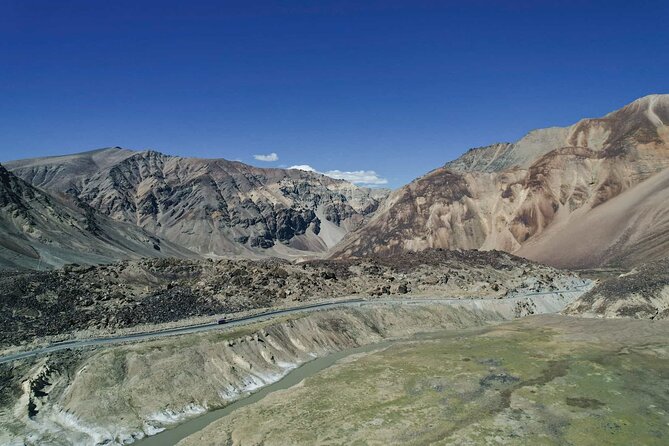
The route continues from Jispa toward Darcha, where the team checks document details. The description says you will not need to show anything yourself because the staff will handle the process. That can save time, though you should still carry your passport and required papers safely.
The main feature is Shinkula Pass. The stop is short, about 20 minutes, but the pass is one of the day’s major riding achievements. High passes are not just scenic lookouts. They bring cold, wind, thin air and rough conditions, so even a short stop can feel substantial.
This is a good point to judge your own pace. The tour is designed for people with moderate physical fitness, not for complete beginners looking for a relaxed road holiday. You need to be able to sit on a motorcycle for long periods, manage luggage and stay alert when conditions are tiring.
Same roads, a very different day in the saddle:
- Mumbai Sightseeing By Motorbike
★ 5.0 · 15 reviews - Himalayas: 15 Days Motorbike Tour To North India
★ 5.0 · 14 reviews - French Toast – A Classic Moto Tour To Pondicherry
★ 5.0 · 11 reviews - Raneh waterfall Khajuraho (motorcycle tour)
★ 5.0 · 9 reviews
Day 5: The long Padum to Lamayuru section
The schedule describes a 332-kilometre ride from Padum to Lamayuru, taking about nine to ten hours. Padum is not clearly introduced in the earlier days, which is one of the route details I would have clarified before booking.
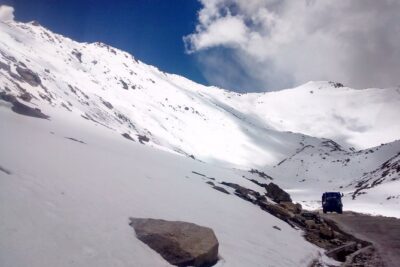
The day includes two high mountain passes, with Singga La listed as a stop at roughly 5,009 metres. That altitude is serious. You may feel the effects even if you are fit, and the limited stop time means this is not a day for lingering over every view.
The payoff is scale. At these heights, the road becomes the event. You get wide views, stark slopes and a strong sense of being far from ordinary transport routes. The drawback is equally clear: nine or ten hours on difficult roads leaves little energy for extra sightseeing.
If you prefer slow mornings, long meals and time to explore each village, this is too compressed. If you want a demanding motorcycle challenge with a fixed route, it fits much better.
Day 6: Lamayuru to Leh and time in the market
From Lamayuru, the route covers about 127 kilometres to Leh in three to four hours, depending on road conditions and scenic stops. Compared with the previous day, this is a welcome reduction in saddle time.
Leh is the practical centre of the expedition. The wider sightseeing plan includes Magnetic Hill, Pathar Sahib Gurudwara, Shanti Stupa and Leh Palace, although the detailed stop list focuses mainly on Lamayuru and Leh Market. Ask how many of these sights are actually included on your departure date.
Leh Market gives you around three hours to rest or browse for souvenirs. This is a useful breather before the next run of high-altitude roads. It also gives you a chance to check your clothing, phone battery, personal medicines and small riding supplies.
Do not assume the market visit replaces a proper acclimatization program. The schedule moves on quickly to Khardung La and Nubra Valley, so anyone sensitive to altitude should discuss the pace with the operator in advance.
Day 7: Khardung La, Diskit Gompa and Hunder
The ride to Nubra Valley crosses Khardung La, listed at about 18,000 feet. The stop is only around 15 minutes for photographs and video, but it is one of the headline moments of the trip.
Khardung La has long been promoted as one of the world’s highest motorable passes. Claims about exact rankings can vary, so I would focus less on the slogan and more on what the crossing means: a high, exposed road leading from Leh toward Nubra.
A tea stop at Khardung follows, then Diskit Gompa. The monastery receives about an hour, making it one of the better chances to slow down and see something beyond the motorcycle. From there, the route continues into Nubra Valley for lunch before the overnight stay at Hunder.
Hunder is listed as a 13-hour overnight stop, which simply reflects a night in the valley rather than an activity lasting 13 hours. The schedule does not specify the hotel standard, so expect practical twin-sharing accommodation rather than a luxury resort unless you confirm otherwise.
Day 8: The Shyok River road to Pangong Tso
This is another major riding day, covering about 180 kilometres in six to seven hours along the Shyok River. The route includes Agham for tea and Durbuk for lunch before reaching Pangong Tso.
The road beside the Shyok is a strong reason to choose a motorcycle tour. You experience the changing surface, the bends and the remoteness directly, rather than arriving after a long nap in a car.
Pangong Tso is the visual reward. The stop is scheduled for photographs and video, followed by an overnight stay at Merak on the lake’s bank. Merak is particularly appealing because you are not simply making a quick day trip to the water and leaving immediately.
The tradeoff is comfort. The information supplied does not promise a particular room type, heating system or bathroom arrangement at Merak. Pack warm layers and keep expectations practical. The price covers twin-sharing stays, not a high-end lakeside hotel.
Day 9: Chushul, Nyoma and the road to Hanle
After breakfast, you ride about 150 kilometres toward Hanle. The first stop is Chushul, followed by tea at Mahe and lunch at Nyoma.
This day is less about famous monuments and more about distance, border-country remoteness and the steady rhythm of a high-altitude road. The stops break up the ride, but the schedule remains purposeful. You should not expect long walks or extended village visits.
Hanle is the overnight base. It is a useful destination for riders who want to get away from the more familiar Leh and Pangong circuit. The supplied plan does not list specific activities in Hanle, so the value lies mainly in the route and location rather than a formal sightseeing program.
Day 10: Umling La and the confusing return details
Umling La is the day’s headline stop, with time for photographs and video on what is described as the world’s highest motorable road. Again, exact records can change, but the road is clearly intended as a major achievement for the expedition.
The rest of Day 10 needs clarification. The schedule says you return to Hanle for lunch and then continue to Leh for the night, while another description refers to heading back toward Leh from Nubra and visiting Khardung La. Those are not the same route.
This may be a simple editing error, a route change or a departure-dependent plan. Ask the operator for the current day-by-day route, total riding distance and overnight locations before booking. This is especially important because road access in Ladakh can change with weather and local conditions.
Day 11: Returning by overnight transport
The final day is described as a farewell followed by an overnight journey of about 12 hours toward the national capital. That suggests the return may be by bus or other road transport rather than by motorcycle, but the exact arrangement should be confirmed.
The meeting and end details show Leh 194101, while the opening day mentions a Delhi or Chandigarh bus and the ending mentions a drop toward Delhi. This is the clearest logistical issue in the supplied information.
Do not book flights, onward trains or hotel rooms based on guesswork. Get the final drop-off city, departure time and transport type in writing. The operator promises free cancellation up to 24 hours before the start, and poor weather or minimum group size can also lead to a new date or full refund, but changes made inside 24 hours are not accepted.
What the $2,004.76 price covers
At $2,004.76 per person, the value depends on how much independent planning you would otherwise do. The fee includes environmental and permit charges, twin-sharing accommodation, an English-speaking road captain, nine dinners, ten breakfasts and a support vehicle with a mechanic from Day 3 through Day 10.
The spare-parts provision is unusually practical. It lists front and rear tubes, spark plugs, clutch and brake wires, brake pads, engine oil and a clutch plate. That does not cover every possible repair, but it shows that the operator has planned for common motorcycle problems.
A first aid box and oxygen cylinder are included too. These are sensible safeguards, not guarantees against altitude sickness or injury. You still need medical, accident and theft insurance, all of which are excluded.
Lunch, telephone use, laundry, tips, table drinks and personal spending are extra. Riding gear is also not included, although knee pads and elbow guards can be hired for Rs. 750, listed as about $11 for the whole trip.
The baggage limit is 60 litres. Since you move your own luggage to the support vehicle and into each accommodation, a soft, manageable bag is more useful than a large hard case.
Who will enjoy this expedition most
I would choose this tour if you want a serious Himalayan motorcycle route with much of the planning already done. It suits riders who value high passes, remote roads and a support crew more than polished hotels or leisurely sightseeing.
It is also a good fit if you are uneasy about tackling Ladakh entirely alone. The backup vehicle, mechanic and road captain reduce some of the risk and hassle, while the private format keeps the group limited to your own party.
I would hesitate if you need a predictable timetable, dislike overnight buses or want generous time at every stop. The route is long, the altitude is demanding, and several logistical details need confirmation.
Should you book it?
Book it if the main goal is to ride through Ladakh and you accept tough days, simple accommodation and changing road conditions. The combination of support, included meals, permits and remote stops gives the price real value.
Before you commit, confirm four things: the exact departure point, the motorcycle model and rental terms, the corrected Day 5 and Day 10 route, and the final return transport. If those details are clear and you have proper insurance, this is a strong choice for an experienced rider who wants a bold, well-supported Himalayan trip rather than a gentle sightseeing holiday.
FAQ
Where does the motorbike expedition start?
The schedule begins with an overnight Volvo bus from Delhi or Chandigarh toward Manali, with arrival near Bhuntar. The listed meeting and end point is Leh 194101, so you should confirm the exact starting arrangement before booking.
How long is the tour?
The experience lasts approximately 11 days.
Is accommodation included?
Yes. Accommodation is included on a twin-sharing basis.
Which meals are included?
The package includes nine dinners and ten breakfasts. Personal drinks, table drinks and other meals are not listed as included.
Is a backup vehicle provided?
Yes. One backup vehicle carries luggage and a mechanic from Day 3 through Day 10.
Is medical support included?
A first aid box and oxygen cylinder are included. Medical, accidental and theft insurance are not included.
Are permits and environmental fees included?
Yes. Environmental and permit fees are included.
How much luggage can I bring?
The recommended maximum baggage size is 60 litres. You must carry your luggage to the backup vehicle and into the accommodation.
Can I hire riding protection?
Yes. Knee pads and elbow guards can be hired for Rs. 750, listed as about $11 for the full trip. Other riding gear is not included.
What happens if the tour is canceled because of weather?
If poor weather causes cancellation, you will be offered another date or a full refund. A new date, alternative experience or full refund is also offered if the minimum number of riders is not reached.
Just added around India
- Mumbai Sightseeing By Motorbike★ 5.0 · 15 reviews
- Half-Day Motor Bike Tour of Mumbai★ 5.0 · 2 reviews
- Himalayas: 15 Days Motorbike Tour To North India★ 5.0 · 14 reviews
- Motorbike Tour To Leh Ladakh★ 5.0 · 2 reviews
- Great Himalayas Motorbike Tours★ 5.0 · 5 reviews
- Raneh waterfall Khajuraho (motorcycle tour)★ 5.0 · 9 reviews
- Jaipur Full-Day Motorbike Tour for Solo Female Travelers★ 5.0 · 4 reviews
- Explore Jaipur on a Motorbike – A Unique Experience★ 4.5 · 5 reviews
India Motorbike Tours, compared.
Leh Ladakh Motorcycle Tour / Private Luxury Car Tours
Read our review →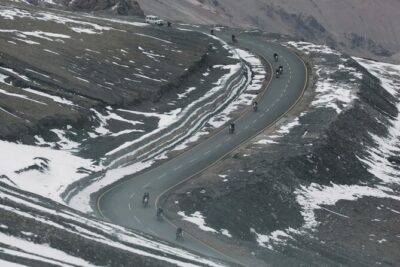
Leh Ladakh Motorcycle Tour – 7 Days Of Ultimate Thrill
Read our review →
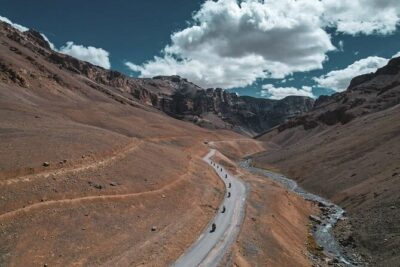
Himalayas: 15 Days Motorbike Tour To North India
Read our review →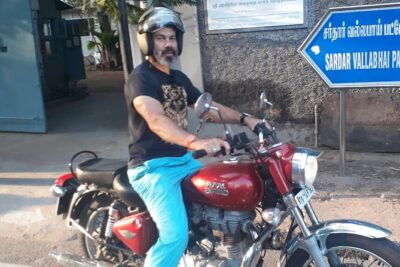
French Toast – A Classic Moto Tour To Pondicherry
Read our review →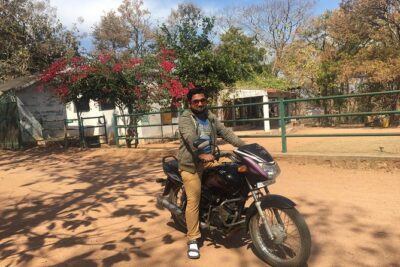
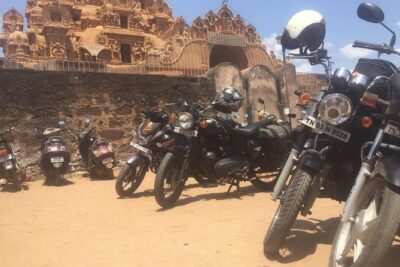
2 Day Royal Enfield Motorcycle tour from Chennai to Pondicherry & Mahabalipuram
Read our review →Browse the lists this tour appears in