
Review · VIETNAM
6 Day Tour in Ha Giang Loop Ban Gioc Waterfall Motorbike
Ban Gioc Waterfall is the prize at the end, but the real adventure is the road there. Over six days, you ride through Ha Giang and Cao Bang, crossing sheer mountain passes, visiting minority villages, sleeping in family homes, and following roads that still feel far from Vietnam’s main tourist trail. You need a valid license accepted under Vietnamese law, and you must be comfortable riding a motorbike.
I especially like the small group size of up to six and the early training session before the ride begins. I also like the mix of dramatic scenery and ordinary local life: a Sunday highland market, hemp weaving in Lung Tam, rice valleys, home-cooked meals, and a blacksmith workshop in Phuc Sen.
The main caution is comfort. Most lodging is basic, and one reported stay involved a wet tent and a faulty zipper, with another night spent on a floor. This is a rewarding road trip, not a polished hotel holiday.
Key points at a glance
- Ban Gioc Waterfall is the grand finale: See Vietnam’s widest waterfall, with a 300-meter span on the jade-colored Quay Son River.
- You ride your own semi-automatic motorbike: A valid Vietnamese-recognized license is required. A passenger option is available for an added fee.
- Ma Pi Leng Pass gets four hours: This is not a quick roadside photo stop. You hike and pause along one of northern Vietnam’s great mountain roads.
- Local life is part of the route: Stay with Dzao families, visit Hmong and Dzao areas, watch hemp cloth being made, and meet Nung blacksmiths.
- The route is physically active: Expect long riding days, cave walks, mountain hikes, switchbacks, and changing road conditions.
- The price covers a lot: The $470 fee includes five nights, meals, fuel, safety gear, guides, taxes, and minor motorbike repairs.
Why this six-day ride is more than a waterfall trip
The route begins in Ha Giang and finishes near Cao Bang, linking two of northern Vietnam’s most scenic provinces. You are not simply driven to a viewpoint, given an hour at a waterfall, and returned to town. You spend much of the trip moving through mountain country under your own power.
That matters because the road becomes part of the experience. You stop often for photographs, rest your legs, and watch valleys change from broad rice-growing areas to narrow limestone corridors. The tour includes English-, Vietnamese-, Dzao-, and Hmong-speaking guides, which gives the group a useful link to local communities along the way.
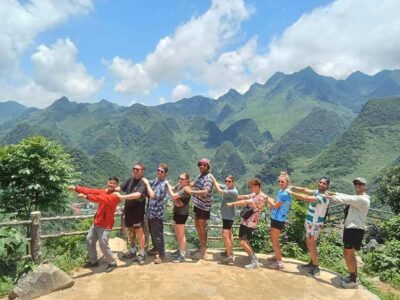
The group is limited to six people. That is small enough to keep the ride manageable and makes it easier to stop for training, photos, meals, and mechanical problems. The first morning is set aside to help you improve your motorbike skills before the main ride begins around 1 p.m.
You should take the license requirement seriously. This is a self-ridden tour, not a standard easygoing back-of-the-bike excursion. If you do not ride, you can hire a driver for an extra fee. A shared car tour is offered every Friday, but that is a different way to experience the route.
More Ha Giang Loop rides in Ha Giang:
- Ha Giang Loop 4 Days 3 Nights Motorbike Tour with easy Rider
★ 5.0 · 972 reviews - Ha giang loop 3days and 2nights with easy rider
★ 5.0 · 718 reviews - Ha Giang loop 3 or 4 Days, Small Group Tour (within easy riders)
★ 5.0 · 429 reviews
Day one: Training, Quan Ba, and a Dzao homestay
Your guide meets you around 9 a.m. in Ha Giang. Rather than rushing straight into the mountains, the morning is used to work on your riding skills. That is a smart feature, especially if you have experience on a motorbike but are unfamiliar with Vietnamese roads, a semi-automatic transmission, or mountain riding.
After lunch and a safety briefing, you begin the ride toward Nam Dam village. The first major stretch is about 45 kilometers, but the distance is less important than the terrain. You pass traditional villages, climb through valleys, and follow winding roads carved into steep mountain sides.
Quan Ba Heaven Gate gives you an early taste of the views ahead. The Fairy Bosom hills and the UNESCO-recognized geopark offer good photo stops, and the schedule allows several breaks. That is welcome on a motorbike, since even a beautiful road can leave your back and legs tired.
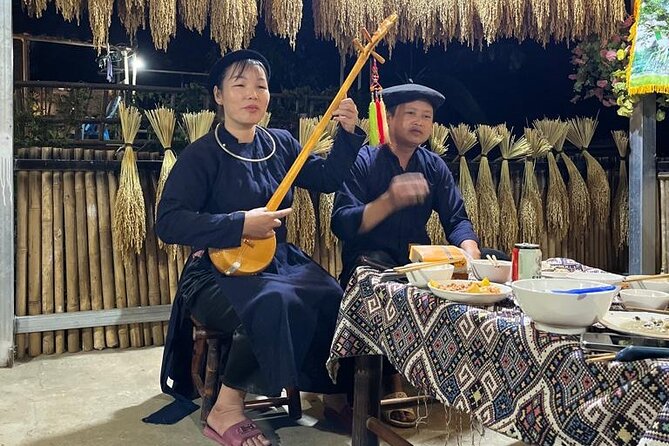
You spend the night in Nam Dam with a host family. The afternoon is open for a village walk, a short hike, helping prepare dinner, or simply resting. Meals include local rice or corn wine, known locally as happy water. Pace yourself. It is offered as part of the welcome, but the next morning begins another full day on the road.
The first night is at Mun Homestay and Bungalow, run by a Dzao family that has worked with the tour for years. You should expect a cultural stay rather than hotel-style privacy. The lodging is basic but gives the first day a human connection that a roadside hotel cannot provide.
Day two: Caves, hemp cloth, and Vietnam’s northern edge
After breakfast, you pack the bikes and climb toward Lung Khuy Cave. The walk takes about an hour and leads to a cave high on a mountain. You get both a view from the climb and time underground, so wear shoes suitable for uneven ground.
The next stop is Lung Tam, a hemp linen village. Here you see how the cloth is produced from beginning to end and can try rolling it yourself. This is one of the route’s most useful cultural visits because it shows a working craft rather than a staged performance. The activity also takes more balance and strength than it first appears.
Lunch comes in Yen Minh, a town in a valley along the route. Afterward, the road heads toward Dong Van and the Dong Van Karst Plateau Geopark. The terrain becomes more rugged, with limestone mountains and narrow roads that make the ride itself the main event.
Try to arrange this part of the trip so you pass through Dong Van on a Sunday. The highland market is a weekly meeting point where local people buy and sell goods and livestock, but it is also a social occasion. The Friday departure is designed to give you the Sunday market experience in either Dong Van or Meo Vac, so check the exact schedule before booking.
The Mansion of the Opium King offers a change of pace. This historic residence is one of the area’s notable buildings and gives you a look at the wealth and power once concentrated in the region. It is not a long visit, but it breaks up the mountain ride well.
Later, you reach Lung Cu Flag Tower, described as Vietnam’s northernmost point. From the tower, you can look across the border toward China. The stop adds political and geographic context to what might otherwise feel like a string of scenic roads.
You sleep in Dong Van town. After a long day, having a proper town base is useful. The schedule includes several stops, so expect an early start and limited time for lingering at any one site.
Day three: Dong Van market and the great Ma Pi Leng Pass
The third day begins with the Dong Van market when dates line up. Give yourself time here. It is one of the best chances to see daily trade and social life in the northern highlands before leaving town.
Then comes Ma Pi Leng Pass, arguably the most dramatic riding section of the trip. The itinerary allows four hours for hiking on top of the pass, with many chances to stop and look down into the valleys. This is a highlight for anyone who enjoys mountain roads, but it is also one of the more demanding parts of the tour.
The road is narrow and exposed in places, and the cliffs make concentration essential. You should not treat the pass as a casual photo location. Keep your attention on footing and traffic, especially when moving between viewpoints.
The route also reaches Tu San Abyss Alley, a huge gorge between Dong Van and Meo Vac. The cliffs rise close to 1,000 meters, while the gorge itself is about two kilometers long and roughly 1,000 meters deep. It is a geological feature shaped over millions of years, and the scale is difficult to take in from one viewpoint.
Lunch is in Meo Vac, a small district town surrounded by steep karst mountains. From there, you ride about 90 kilometers toward Bao Lac. This section is often the sort of road that motorbike riders remember most, because the journey feels remote and the route keeps changing.
You spend the night in a homestay in the Bao Lac area. This is another basic stay, so pack with flexibility. The rewards are the setting and the access to the next morning’s walk, not luxury bedding or extensive hotel facilities.
More waterfall rides in Ha Giang:
- Da Lat’s Countryside & Waterfalls Day Tour by Motorbike
★ 5.0 · 462 reviews - Sapa Motorbike Tour With Local Guide 1 Day – Waterfalls, Villages
★ 5.0 · 254 reviews - From Hanoi: Ban Gioc Waterfalls – Authentic Experience 2d/2n
★ 5.0 · 148 reviews - Hidden Hon Ba Nature Reserve Motorcycle Tour BBQ,Beer,Waterfall
★ 5.0 · 127 reviews
Day four: Bao Lac, Dragon’s Stairway, and Pac Bo
The morning begins in Bao Lac National Park, an area protecting closed tropical forest, limestone formations, and endangered ecosystems. You walk to a waterfall and have time to relax before getting back on the bike.
This pause is valuable after the long ride from Dong Van. It also gives the day a slower start, although you will still be covering substantial ground afterward. Bring patience for changing road speeds and conditions.
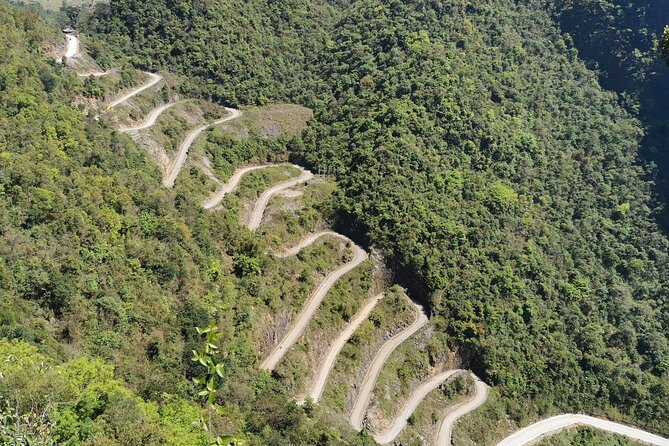
At Khau Coc Cha Mountain Pass, you stop for lunch beside one of the route’s most striking roads. Fourteen consecutive switchbacks climb a near-vertical rock wall, earning the pass the nickname Dragon’s Stairway. The view is dramatic, but riders should take it slowly. A road this steep and tightly curved deserves full attention.
Pac Bo Cave adds an important historical stop. Ho Chi Minh returned to Vietnam here in 1941 after 30 years away and began his campaign for independence. The setting is scenic, but the place matters because it connects the remote border country to one of the central stories of modern Vietnam.
You spend the night near Pac Bo. By this point, you will have had several demanding riding days, so the overnight stop helps break up the route toward Cao Bang and Ban Gioc.
Day five: Angel Eye Mountain and Ban Gioc Waterfall
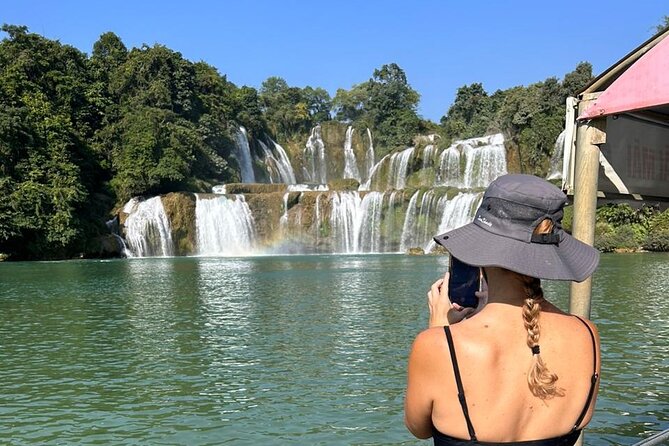
The morning heads toward Nui Thung Mountain, also called Angel Eye Mountain. The mountain sits near Thang Hen Lake, villages, rice fields, and a secluded valley known as Tuyet Tinh Coc. The stop takes about an hour, but the broader area gives you a chance to see a quieter side of Cao Bang province.
You then pass through Tra Linh, a border town between Vietnam and China, before continuing to Ban Gioc Waterfall. The road brings you to the trip’s headline sight, but the setting is as important as the falling water.
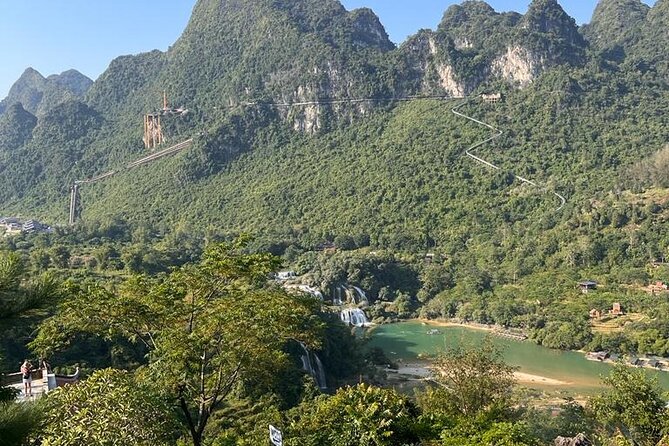
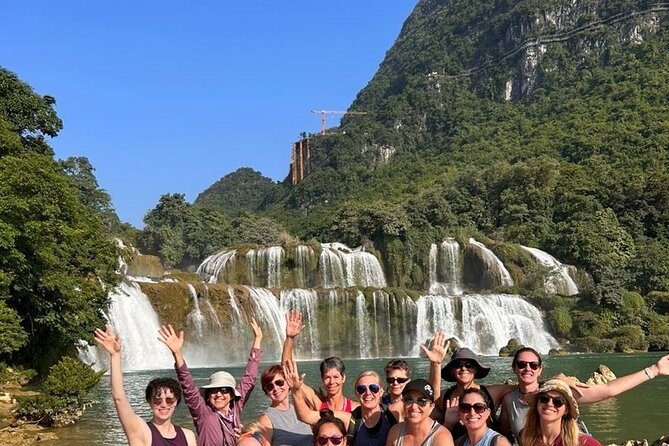
Ban Gioc drops about 30 meters and spreads roughly 300 meters across, making it Vietnam’s widest waterfall. The Quay Son River runs through a pastoral area of rice fields, bamboo groves, and limestone peaks. Because the site remains less crowded than many of Vietnam’s famous natural attractions, you may find the visit calmer outside weekends and public holidays.
The stop lasts about an hour. That is enough to see the falls and take photographs, but you should not expect a full-day visit. The waterfall is the visual reward for five days of riding, while the route itself provides most of the cultural and scenic variety.
The $470 price is easier to judge when you count what is covered: five nights of accommodation, five breakfasts, six lunches, five dinners, fuel, a semi-automatic motorbike, safety equipment, water, local rice or corn wine, taxes, and minor repairs such as a flat tire. That is strong value for a six-day guided ride.
The cost does not cover personal travel insurance, snacks, beer, juices, tips, or the fee for hiring a driver. You should also budget for comfort limitations. The accommodation is generally basic, and the available feedback includes a serious complaint about a tent with water inside and a zipper that did not close, followed by a night spent on a floor. Ask the operator about sleeping arrangements before you pay, especially in wet weather.
Day six: Pagoda, Tiger Cave, and Nung metalwork
The final morning begins at Phat Tich Truc Lam Ban Gioc Pagoda. It is the first pagoda built at the northern border position in Dam Thuy, Trung Khanh, and Cao Bang. The stop offers a quiet contrast to the noise and effort of the previous riding days.
Nguom Ngao Cave is about five kilometers from Ban Gioc Waterfall. Its name means Tiger Cave in the Tay language, linked to the story that tigers once used the cave as a den. The cave was discovered in 1921, opened to visitors in 1996, and recognized as a national scenic site in 1998.
The final cultural stop is Phuc Sen Forging Village, where Nung craftspeople have long made tools using traditional forging methods. You can visit a blacksmith workshop and try making your own knife. It is a practical, hands-on finish, and it gives you something more memorable than another viewpoint.
The group reaches Cao Bang city around 2 p.m. If you are using the transfer back to Hanoi, the van is expected to arrive in central Hanoi around 9 p.m. That makes the final day long, so do not book an evening flight or a tight connection from Hanoi.
Riding gear, meals, and physical demands
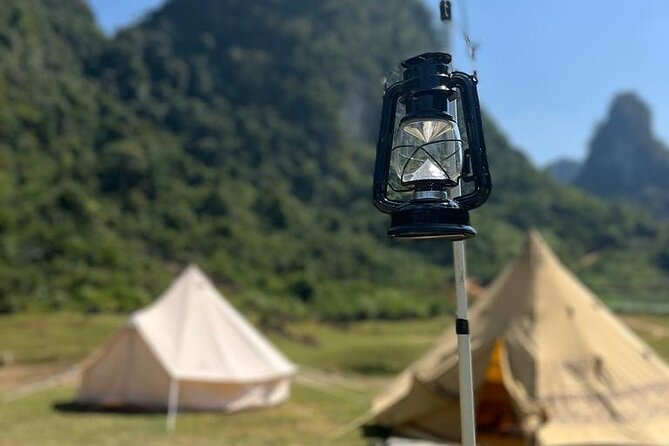
The tour supplies a semi-automatic motorbike and safety equipment including a helmet, gloves, knee pads, elbow pads, a reflective vest, a poncho, a first-aid kit, a backpack cover, and an aluminum bottle. Gear is also provided to secure your luggage.
Fuel is included, as are minor repairs during the ride. That coverage matters in a remote mountain region, although it does not turn the trip into a mechanically risk-free holiday. You should still carry personal insurance, which is not included.
The physical rating is moderate. You will ride for several hours on multiple days, hike for four hours at Ma Pi Leng Pass, walk to a waterfall, climb to Lung Khuy Cave, and explore Nguom Ngao Cave. The roads, heat, rain, and motorbike posture may be more tiring than the individual stops suggest.
Meals include five breakfasts, six lunches, and five dinners. Water and local happy water are included. Snacks, juices, and beer are extra, so bring or buy your own small supplies when needed.
Who should book this Ha Giang to Ban Gioc route
I would recommend this tour to a confident motorbike rider who wants scenery, local contact, and a demanding route rather than polished accommodation. It suits someone who sees a basic homestay as part of the experience and who is happy to trade comfort for access to remote roads.
It is also a good fit if you want a structured ride without joining a large convoy. The maximum group size is six, and a local guide leads the way. You get route support, meals, fuel, equipment, and help with minor repairs without giving up the freedom of riding your own bike.
I would hesitate to recommend it to a new rider, anyone uneasy on steep mountain roads, or anyone expecting reliable hotel plumbing and dry, private rooms every night. If you do not have the required license, choose the shared car option offered on Fridays or ask about hiring a driver.
The tour requires good weather and may be rescheduled or refunded if conditions are poor or the minimum number of riders is not reached. For a full refund, cancel at least six full days before the start time. Later cancellations receive only a partial refund or no refund, depending on timing.
Should you book it?
Book this six-day ride if Ban Gioc is only one reason you want to visit northern Vietnam. The greater reward is the complete route: Quan Ba’s hills, Dong Van’s market, Lung Cu, Ma Pi Leng, Tu San Abyss Alley, Pac Bo, Angel Eye Mountain, and the villages where weaving and forging remain part of daily life.
Choose something else if you want short riding days, upscale lodging, or a trip where weather and road conditions are easy to control. For the right rider, the $470 price covers a substantial amount and the small group keeps the experience personal. Just confirm the bike, driver option, sleeping arrangements, and license rules before booking.
FAQ
Do I need a motorbike license for this tour?
Yes. This is a self-ridden motorbike tour, and you need a valid license accepted under Vietnamese jurisdiction.
Can I hire someone to drive the motorbike?
Yes. Hiring a driver is possible for an added fee, but that cost is not included in the tour price.
Is a shared car tour available?
Yes. A shared car tour is offered every Friday.
How many people can join the tour?
The tour has a maximum of six travelers.
What time does the tour start?
The stated start time is 9 a.m.
How many nights of accommodation are included?
Five nights of accommodation are included.
Are meals included?
Yes. The tour includes five breakfasts, six lunches, and five dinners.
Is fuel included?
Yes. Gasoline or petrol is included in the price.
Is motorbike safety equipment provided?
Yes. The tour provides a helmet, gloves, knee pads, elbow pads, a reflective vest, a poncho, a first-aid kit, a backpack cover, and an aluminum bottle.
What happens if bad weather cancels the tour?
If poor weather causes cancellation, you will be offered another date or a full refund.
More 6-Day Experiences in Ha Giang
- 6 Day Motorcycle Tour (Northern Thailand) from Chiang Mai
★ 5.0 · 5 reviews
Just added around Ha Giang
- Ha Giang 4 Days Easy Rider with The Loop Tours★ 5.0 · 6 reviews
- Motorbike Tours vietnam Off-road Ha Giang Dong Van Geopark 3D2N★ 5.0 · 4 reviews
- Motorbike 4 Days Ha Giang Loop Tours★ 5.0 · 9 reviews
- 3-day Motorbikes Adventure Tour via Ha Giang Loop★ 5.0 · 5 reviews
- Ha Giang Loop 3D/2N Private Tour with Easy Rider★ 5.0 · 3 reviews
- Ha Giang Loop Motorbike Adventure – 3 Days from Hanoi★ 5.0 · 6 reviews
- Ha Giang Motorbike Tour 4 days 3 nights★ 5.0 · 3 reviews
- Guided Multi-2D/ 3D/ 4D Motorbike with JASMINE Tour in Ha Giang★ 5.0 · 4 reviews
Ha Giang Loop Tours, compared.
Ha Giang Loop 4 Days 3 Nights Motorbike Tour with easy Rider
Read our review →
Ha giang loop 3days and 2nights with easy rider
Read our review →
Ha Giang loop 3 or 4 Days, Small Group Tour (within easy riders)
Read our review →
3-Day Ha Giang Loop Tour (small group with easy rider)
Read our review →
3-day Motorbike Ha Giang Loop Luxury Tour With Easy Rider
Read our review →
Browse the lists this tour appears in