Review · MOTORBIKE TOURS
7 Day Best of Transylvania Motorcycle Tour from Cluj
The best part of this seven-day motorcycle tour is the road itself. You’ll cross the Carpathians on the Transfagarasan and Transalpina, two spectacular routes where every bend opens onto another broad mountain view. Along the way, you’ll stop at castles, fortified churches, and old citadels tied to Romania’s medieval past and Dracula lore.
I like the mix of serious riding and village-based travel. You are not simply ticking off famous sights from a bus. You spend nights in small hotels and guest houses, eat local food, and see parts of Transylvania that make the region feel like a place people live, not just a film set. I also like the small group size, capped at 10, and the careful route briefings from guides Alex, Alexe, and Claudia.
The main drawback is cost control. At $1,144.09 per person, the tour includes lodging, breakfasts, guiding, and transfers, but you still pay for fuel, road taxes, parking, attraction tickets, lunches, dinners, and drinks. The daily riding also calls for solid fitness and confidence on narrow, twisting roads.
Key points before you book
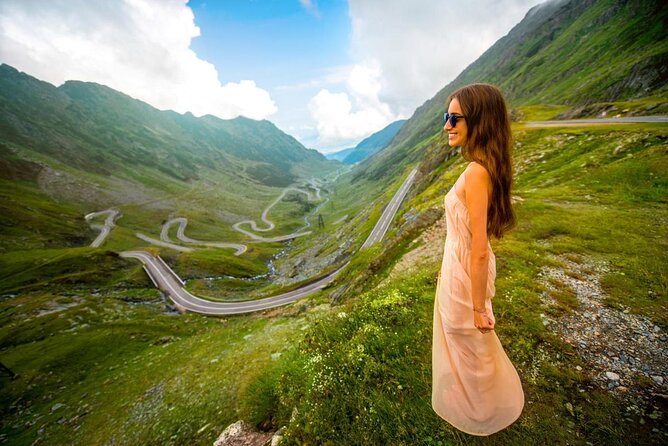
- Two of Romania’s great motorcycle roads: Ride the Transfagarasan and Transalpina, including the 2,145-meter Urdele Pass.
- A proper medieval itinerary: Visit Sighisoara, Biertan, Bran Castle, Rasnov, Poienari, and Alba Iulia.
- Three mountain roads in one week: The route also includes Transbucegi, a narrow climb with views from about 1,925 meters.
- Flexible motorcycle choice: Bring your own bike or arrange to rent a BMW motorcycle.
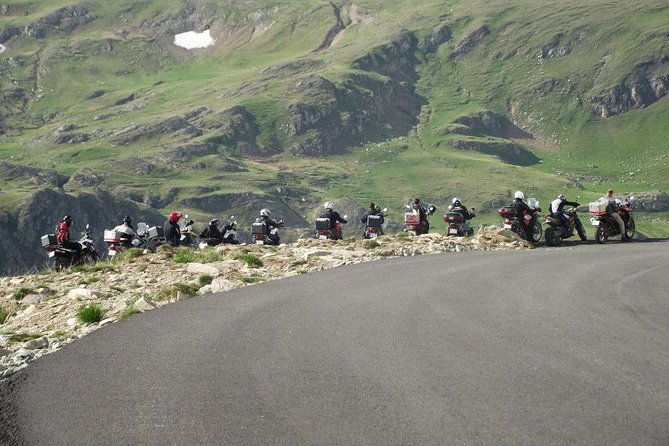
- Small-group guiding: The maximum group size is 10, with an English-speaking guide and a daily route briefing.
- Simple, local lodging: Six nights are included, with one four-star hotel, three three-star hotels, and two guest houses.
Why the roads are the real star
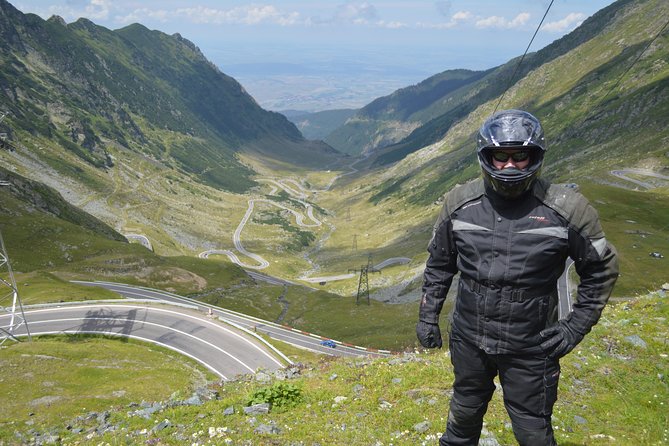
You can visit Transylvania by car, but a motorcycle gives this trip its point. The Transfagarasan, Transalpina, and Transbucegi roads are not short scenic detours. They are the backbone of the week, and you will spend meaningful time riding through the Carpathians.
The Transfagarasan is the famous one. Built between 1970 and 1974 as a military route under Nicolae Ceausescu, it climbs and twists through the mountains in a long series of bends. It was built after the Soviet invasion of Czechoslovakia, a reminder that this dramatic road began as a military project rather than a tourist attraction.
The Transalpina reaches its high point at Urdele Pass, 2,145 meters above sea level. That makes it the highest mountain road in the Carpathians. It gives you a different kind of ride from the Transfagarasan, with long climbs, open high-country views, and a strong sense of altitude.
Transbucegi is shorter in the stated itinerary, but it adds another mountain challenge. Also called the Babele Road, it is narrow and sinuous, climbing to about 1,925 meters. You should be comfortable with tight turns and changing road conditions before signing up.
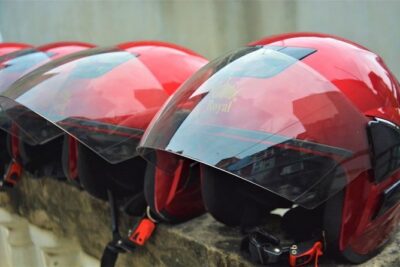
The tour does not promise a leisurely cruise. The roads are part of the attraction, and the physical demand is real. Pack proper motorcycle clothing, including a helmet, gloves, jacket, pants, and boots. A valid passport and unrestricted motorcycle driver’s license are required at departure.
A few more rides around the world worth a look
- Leh Ladakh Motorcycle Tour – 7 Days Of Ultimate Thrill
★ 5.0 · 17 reviews - 7 days Nepal Motorcycle tour
★ 5.0 · 12 reviews - 7-Day Tanzania Private Guide Motorcycle Safari Tour
★ 5.0 · 5 reviews
Day 1: Turda Salt Mine starts the week underground
The trip opens with a transfer to Turda and a visit to Salina Turda. The town began as the Roman settlement of Potaissa, and its salt mine is one of Romania’s most unusual sights.
Inside, enormous underground halls carry the names of kings and queens. You get about an hour here, enough to see the scale of the mine without turning the first day into a long museum visit. The admission ticket is not included, so keep extra cash available for this and the other paid attractions.
This is a smart first stop. You begin with something very different from the mountain roads ahead, and the mine gives the week a sense of place before you start linking Transylvanian towns and passes.
Day 2: Biertan and the medieval streets of Sighisoara
Biertan’s fortified church dates from the 12th century and belongs to the UNESCO World Heritage list. It is a Lutheran church, a reminder of the Saxon communities that shaped many villages in Transylvania.
You get about an hour at the church. The appeal is not only the building itself, but the way the fortified church fits into the village setting. These were places of worship and defense, built for a time when communities had to protect themselves as well as pray.
Later, you reach Sighisoara, one of the week’s major stops. Its medieval citadel is also a UNESCO World Heritage Site, and the Clock Tower provides the obvious anchor for your two-hour visit. Sighisoara is linked with Vlad the Impaler, the historical figure behind much of the Dracula legend.
Do not expect the Dracula connection to explain everything about the town. Sighisoara works best as a preserved medieval citadel with steep lanes, towers, and old walls. The extra time here matters. You can walk rather than simply stop for a photograph, though admission fees are not included.
Day 3: Bran Castle and Rasnov
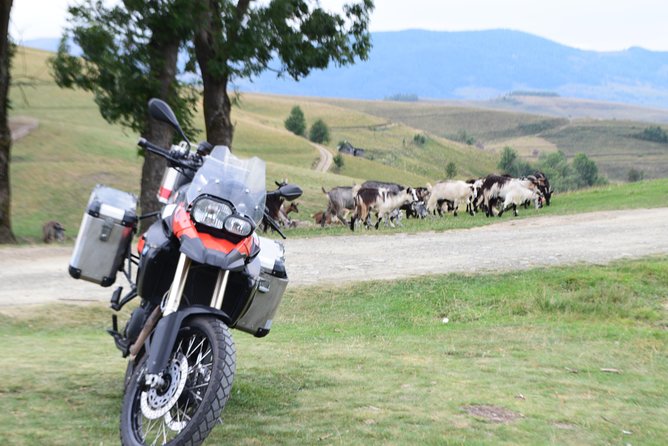
Bran Castle is the famous name on Day 3. The fortress dates to 1377 and is widely known as Dracula’s Castle. Its connection to the fictional Dracula is stronger than its direct connection to Vlad the Impaler, but the setting and reputation make it an important stop for first-time visitors to Transylvania.
The visit lasts about an hour. That is enough for a focused look, but it is not a slow, detailed museum day. If Bran is your main reason for booking, remember that the tour gives equal weight to the roads, villages, and other fortresses.
Rasnov Citadel follows, with about an hour for the gardens and panoramic views. It is described as the largest medieval peasant fortification in Eastern Europe. The site adds a useful contrast to Bran. Bran is the famous castle; Rasnov shows how a larger rural community could use a fortified hilltop for protection.
Both visits have separate entry costs. The schedule is also full, so you should plan for a day that mixes riding, walking, and stairs.
Same roads, a very different day in the saddle:
- Ho Chi Minh City Street Food Tour & Sightseeing By Motorbike
★ 5.0 · 9,413 reviews - Hanoi Motorbike Tour: Food, Culture and Fun by Vintage Motorbike
★ 5.0 · 6,699 reviews - Saigon By Night and Street Food By Motorbike | Opt: Ao Dai Riders
★ 5.0 · 4,066 reviews - Private Street Food Tour by Motorbike/Car with Local Students
★ 5.0 · 3,950 reviews
Day 4: Transbucegi, Peles Castle, and royal Romania
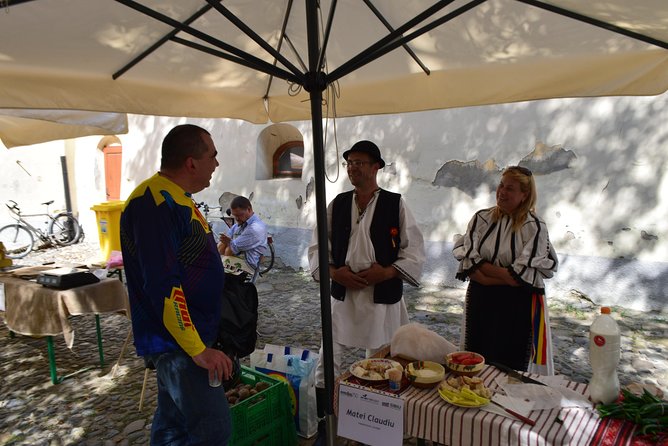
Day 4 brings you onto Transbucegi, the newest mountain road on the route. The road climbs toward the Bucegi Mountains and offers some of the finest views of the week. At roughly 1,925 meters, it is high enough to make weather and road conditions important.
The stop is listed as about an hour, but the ride itself is the main event. You will want to keep your attention on the bends, not only on the scenery. A guide is especially useful here because the day combines a narrow mountain road with a scheduled castle visit.
Peles Castle then changes the mood. This elegant royal residence was home to many of Romania’s monarchs and is considered one of the country’s most beautiful royal buildings. You get about an hour, with admission extra.
Peles is a good counterpoint to the fortresses. It represents royal comfort and ceremony rather than defense and legend. The short visit means you will see the main appeal without losing the riding rhythm of the day.
Day 5: The Transfagarasan challenge
Day 5 is built around the Transfagarasan Highway. For many riders, this is the reason to come to Romania. The road climbs sharply through the Carpathians, with a long sequence of bends and a reputation as one of Europe’s most difficult and entertaining motorcycle roads.
The itinerary allows about an hour at the stop, but that does not describe the whole experience of riding the highway. The time on the road is spread through the day, and the route demands attention. You will need to manage corners, traffic, altitude, and fatigue.
This is not the place to test a motorcycle license for the first time. The tour requires an unrestricted motorcycle license and moderate physical fitness for good reason. If you enjoy technical riding, the road should be a highlight. If you prefer relaxed touring, this day may feel like work.
The road is included in the guided route, but fuel, road taxes, parking, and personal expenses are not. You should budget for those costs before departure.
Day 6: Poienari, Curtea de Arges, and the high Transalpina
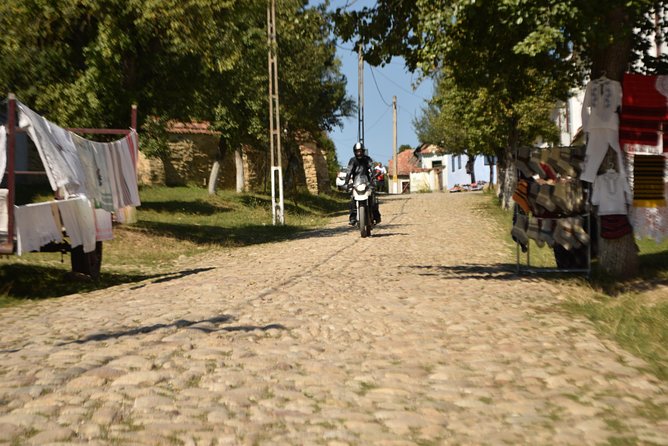
Poienari Fortress is one of the most demanding sightseeing stops. It was Vlad the Impaler’s loyal citadel, and reaching it means climbing 1,200 steps. The stated visit lasts about an hour, so you should arrive ready to walk uphill without rushing.
This is a better stop for people who want the historical Vlad connection rather than only the Dracula brand. It is also the clearest physical test of the sightseeing days. Wear comfortable riding clothes that still let you climb, and do not underestimate the stairs.
Curtea de Arges Monastery follows with a shorter, 45-minute visit. The 16th-century Byzantine cathedral is tied to legends as well as Romanian history. It gives the day a quieter religious and architectural pause before the long mountain ride.
Then comes the Transalpina. The road reaches its highest point at Urdele Pass, 2,145 meters, making it the highest road in the Carpathians. You get about two hours at the stop, but again, the value is in the riding itself.
This is a big day. Poienari demands stairs, Curtea de Arges asks for attention to a historic church, and Transalpina delivers high-altitude riding. If you are not used to full days in the saddle, this is where fatigue may catch up with you.
Day 7: Alba Iulia closes the loop
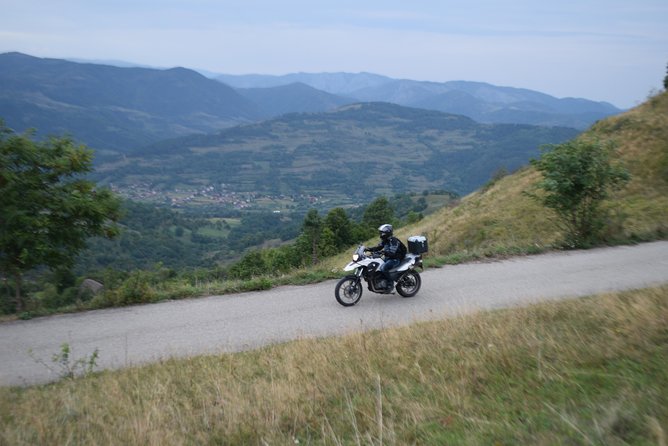
The final stop is Alba Iulia Citadel, a star-shaped fortress with seven bulwarks. Its design is associated with Vauban-style fortifications, giving you a final look at military architecture after a week of castles and fortified churches.
The visit lasts about an hour and is free according to the tour details. It is a fitting final stop because it brings the itinerary back to large-scale defensive architecture after the intimate villages and mountain roads.
The tour ends back at the meeting point in Turda. Airport transfers from Cluj are included, which makes the start and finish easier to manage, especially if you are flying in without your own transport.
Lodging, meals, and motorcycle arrangements
The package includes six nights: one night in a four-star hotel, three nights in three-star hotels, and two nights in guest houses. This is not a luxury hotel tour, and it does not try to be one. The mix fits the route, allowing you to stay in interesting villages instead of returning to one large city each evening.
Six breakfasts are included. Lunches, dinners, drinks, and individual activities are not. That gives you some control over spending and dining choices, but the advertised price is not an all-inclusive figure.
You can bring your own motorcycle or rent a BMW motorcycle. If you rent, confirm the exact model, rental terms, and costs before departure, since the supplied details do not specify them. The guide provides a general map and a daily route briefing, which helps you understand the day before setting out.
The tour is guaranteed to depart, subject to the stated booking conditions, and may use an English or Spanish-speaking guide. The listed names connected with the operation are Alex, Alexe, and Claudia. Alex and Alexe are especially important to know if you want a local guide who can explain the roads and places as you ride.
Is $1,144.09 good value?
The price is reasonable for a guided seven-day motorcycle trip if you value convenience and route planning. Six nights of accommodation, six breakfasts, local guiding, route briefings, airport transfers, and a carefully linked itinerary are included.
It becomes less of a bargain if you expect a package with every cost covered. You still pay for fuel, road taxes, parking, attraction admission, meals beyond breakfast, drinks, and optional activities. Bran Castle, Sighisoara, Biertan, Peles, Poienari, Curtea de Arges, and Turda all have admission costs or possible visitor charges outside the package.
The strongest value is the route. Planning these mountain roads, medieval towns, and overnight stops alone would take time, and riding them with a local guide removes much of the guesswork. The tour also limits the group to 10, which is more manageable than a large motorcycle convoy.
The cancellation terms are strict: the experience is non-refundable and cannot be changed for any reason. Only book once your dates, passport, motorcycle license, and riding gear are ready.
Who should book this ride?
I would choose this tour if you want a focused Romanian motorcycle holiday rather than a general sightseeing trip. It suits riders who enjoy tight bends, mountain roads, historic fortresses, and modest but characterful lodging.
It is also a good choice if you are new to Romania and want local help with the route. The week links famous sites with smaller places that would be easy to miss on a rushed independent trip.
I would hesitate if you dislike long riding days, stairs, or changing hotel rooms. Poienari’s 1,200 steps and the high mountain roads require energy. You should also allow extra money for the many costs outside the package.
Should you book it?
Book this tour if the Transfagarasan and Transalpina are high on your riding list and you want castles, Saxon villages, and Romanian food along with them. The route has enough variety to make the week feel like more than a road test, while the small group and local guides add useful structure.
Skip it if you want an all-inclusive holiday or a gentle sightseeing schedule. For a confident rider who wants Romania’s best mountain roads with a strong medieval setting, this is a well-balanced seven-day plan.
FAQ
How long is the motorcycle tour?
The tour lasts approximately seven days and includes six nights of accommodation.
Where does the tour start and end?
It starts at Adventure Motorcycle Tours and Rentals Romania in Turda and ends back at the same meeting point.
Are airport transfers included?
Yes. Round-trip airport transfers from Cluj are included.
Can I bring my own motorcycle?
Yes. You may bring your own motorcycle or rent a BMW motorcycle.
What motorcycle license do I need?
You need a valid passport and an unrestricted motorcycle driver’s license at departure.
What accommodation is included?
The package includes one night in a four-star hotel, three nights in three-star hotels, and two nights in guest houses.
Are meals included?
Six breakfasts are included. Lunches, dinners, beverages, and individual activities are not included.
What is the maximum group size?
The tour has a maximum of 10 travelers.
Just added around the world
- Valencia: Excursión en Moto de Agua + Paddle Surf★ 4.9 · 9 reviews
- Motorbike adventures on a dual purpose motorbike in the Garden Route and Karoo.★ 5.0 · 3 reviews
- Visit 5 Districts & The Hidden Gems In Saigon By Motorbike★ 5.0 · 8 reviews
- Motorcycle rental Trogir / BMW F850GS / Your own motorbike tour★ 5.0 · 2 reviews
- Motorcycle Adventure through Bardenas Reales★ 5.0 · 16 reviews
- 1250cc Motorcycle Rental from Turda★ 5.0 · 4 reviews
- DB Half day Motorcycle Offroad Siem Reap Tour★ 5.0 · 7 reviews
- Motorcycle day tour to Rila monastery★ 5.0 · 2 reviews
Tours, compared.
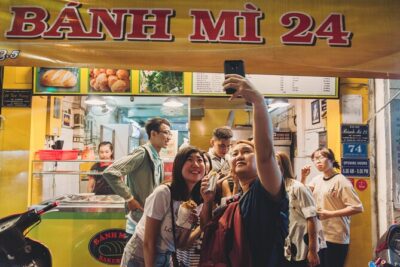
Ho Chi Minh City Street Food Tour & Sightseeing By Motorbike
Read our review →
Hanoi Motorbike Tour: Food, Culture and Fun by Vintage Motorbike
Read our review →
Private Street Food Tour by Motorbike/Car with Local Students
Read our review →
Street Food Tasting & Sightseeing Tour by Motorbike
Read our review →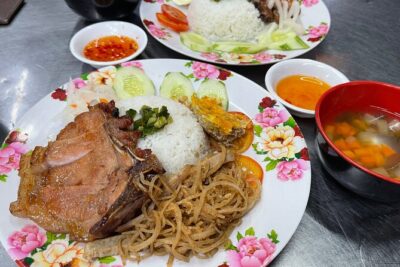
Top Notch Street Food Motorbike Tour In Ho Chi Minh City
Read our review →
Private Street Food Motorbike Tour in Ho Chi Minh City
Read our review →
Barcelona Private Tour by Sidecar Motorcycle
Read our review →